|
Good afternoon, and happy Fed Day to those who celebrate. For anyone playing rate cut drinking games like we were in the office today (one basis point = one shot got out of hand very quickly) and forgot what happened, the first interest rate cut in over four years came in at 50 basis points.
That was exactly what the market anticipated, but only 17.8% of our readers saw it coming. Don’t feel bad, though: Among major Wall Street firms, the vast majority thought it’d be a 25 bps cut, with only JP Morgan calling it correctly.
It’s a very big day for investors everywhere, so we’re dedicating this issue to interest rates: How to invest now that cuts are here, what to expect from the Fed in the months ahead, and what it all means for your portfolio.
Enjoy this special FEDition of Brew Markets!
—Mark Reeth & Lucy Brewster
|
|
|
|
|
|
|
|
|
|
|
|
|
|
|
|
| Data is provided by |

|
*Stock data as of market close.
Here's what these numbers mean.
|
-
Stocks soared at 2:01 pm today as news of a 50 bps cut hit the wire, before paring back their gains as investors digested the announcement. It’s not that investors aren’t happy about today’s rate cut, it’s that they saw it coming from a mile away. All three major indexes ended the day just slightly in the red, though the Russell 2000, home of small caps, soared higher and stayed there (keep reading to learn why).
-
Bonds sank while yields rose, though that likely won’t last long. Lower interest rates mean lower yields, and since bonds and yields move inversely, bond prices are expected to rise from here.
-
Gold hit yet another record high shortly after the Fed cut rates, which isn’t too surprising—theoretically, gold should rise as interest rates fall. But gold came off those highs and ended the day in the red, which isn’t too surprising either—gold has had a record-breaking run in 2024, outpacing the S&P 500’s gains year to date, and it seems likely that today’s news was already priced in.
-
In the midst of a wild day for markets, oil was an island of calm. While lower interest rates do have some effect on oil—lower rates potentially mean stronger economic growth, which means more crude demand—traders are far more focused on geopolitics and economic woes in China.
|
|
|
|
Saul Loeb/Getty Images
|
Like eagle-eyed Swifties awaiting the release of Reputation (Taylor’s Version) or football fans agonizing over whether their team will reach the Super Bowl, investors have been anticipating how much the Federal Reserve will slash rates by (yes, we’re lame).
And today, we got the answer. In its first cut in over four years, the Fed cut interest rates by 50 basis points, surprising the swath of economists who predicted a more standard 25 basis point cut—and markets celebrated.
How did we get here? Back during the peak of the Covid-19 pandemic, the Fed kept interest rates near zero to stimulate the economy. But as inflation spiraled out of control, the Fed aggressively hiked rates for 11 consecutive meetings over the course of 2022 and 2023. Then, once again, the seesaw fell out of balance as the labor market slowed and consumers tightened their belts, slowing economic growth.
Now, the central bank is going for a soft landing, in which the economy is stimulated by lower rates while not slowing enough to send it into a recession. Lower rates means companies should be able to spend more, buying homes will be more affordable, and investors will unleash cash reserves into risk-on assets like equities.
Powell’s path on the way down
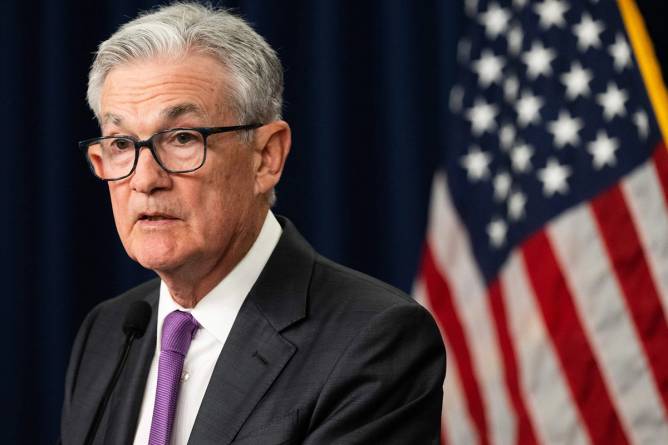
During his press conference, Fed Chair Jerome Powell reiterated that the central bank will be making its monetary decisions meeting-by-meeting and rely on macro data. But while the Fed went big today, Powell warned that “no one should look at this and say this is the new pace.”
The Fed’s updated dot plot now calls for a target range of 4.25% to 4.5% by the end of this year, with policymakers’ median projection 4.4%. That means another 50 basis points worth of cuts this year, which will likely be split into two smaller cuts. The median projected Fed Funds Rate by the end of 2025 is now 3.4%, which would indicate another 100 basis points worth of cuts next year, with the Fed Funds Rate eventually reaching a long-run neutral rate of 2.9% in 2026. However, Powell could easily change course, as the Fed has done many times in the past.
“After pushing the envelope with a double-sized rate cut, investors should expect a rather regimented easing process going forward that sees rates come down closer to neutral over time,” explained Chief of Investment Strategy at Glenmede Jason Pride in a note today.—LB
|
|
|
If you don’t like sleeping on investing opportunities, we’ve got some intel to share. We’re talking about index options, specifically Nasdaq-100® Index Options (NDX).
The Nasdaq-100® Index (NDX) is made up of 100 of the largest domestic and international nonfinancial companies listed on the Nasdaq Composite based on market capitalization.
Now, the details on index options:
-
Index exposure = broader exposure to securities. This typically reduces volatility.
- Index options products are some of the most liquid derivative products available. They manage trillions of notional exposure daily.
- Many index values (aka prices) are relatively high compared to single stock prices. As a result, index options have considerable inherent leverage.
That list doesn’t even cover half of the benefits, either. Index funds also offer granular expiry cycles: They’re cash settled at expiration, and they’re European-styled (i.e. contracts can only be exercised upon expiration).
And the bow that ties this promising package together? Potential tax benefits.
Learn more about NDX index options and how you can gain exposure to leading businesses.
|
|
🟢 What’s up
-
US Steel gained 1.57% as the battle over the future of the legacy steelmaker continues.
-
Intuitive Machines skyrocketed 38.33% thanks to a deal between the space communications company and NASA worth over $4.8 billion.
-
Victoria’s Secret popped 3.63% after Barclays analysts upgraded shares from “Underweight” to “Equal Weight.”
-
Barclays analysts were active today, boosting VF Corp. 3.89% by upgrading the shoewear company from “Equal Weight” to “Overweight.”
-
Duolingo rose 3.20% to a new all-time high, and though there was no news propelling the multilingual app higher, shares have continued to rise ever since its strong earnings announcement in early August.
 What’s down
-
ResMed tumbled 5.12% thanks to a downgrade from Wolfe Research due to concerns that a new drug from Eli Lilly may eat into the med tech company’s share of the CPAP machine market.
-
eBay sank 2.64% after its CFO sold over $1.9 million in company stock.
-
Cencora fell 2.58% on the news that the drug distributor paid hackers $75 million in ransom over the course of three bitcoin installments, the largest cyberattack extortion payment ever.
|
|
“Our patient approach over the past year has paid dividends. Inflation is now much closer to our objective, and we have gained greater confidence that inflation is moving sustainably toward 2%.”
They said it couldn’t be done. They said that he’d missed the boat on a recession, that a soft landing was impossible, that he’d used the word “transitory” too often for any sane person.
But Federal Reserve Chair Jerome Powell has certainly earned his victory lap today. Bringing inflation down without sending the economy spiraling was a balancing act few thought he could pull off. And while a cooling labor market and still-high inflation prove his job isn’t done yet, if the market’s reaction is any indication, investors are pretty darn pleased with how good ol’ J-Pow has handled things.
|
|
Sunan Wongsa-nga/Getty Images
|
The Powell plane is cleared for a soft landing. But don’t start clapping just yet.
While economists spent the past week debating whether the Federal Reserve will cut rates by 25 or 50 basis points, the more relevant question is how lower interest rates will affect your portfolio.
Historically, rate cuts have given equities a boost. But with valuations so high and the market already pricing in rate cuts, investors treated today's announcement as a sell-the-news moment. Regardless of how stocks performed today, fine-tuning your portfolio to best position yourself for this massive economic shift will set you up for gains in the months and years ahead.
Here’s how to invest in a world with lower interest rates:
Small caps: Since smaller companies usually carry more debt compared to their larger peers and are therefore more sensitive to borrowing costs, they should get a boost, according to UBS strategist Jonathan Golub. They also rely more on outside financing, which becomes more affordable with lower rates.
However, Golub believes large-cap growth stocks will also benefit. These stocks have been popular over the last few months, and investors who’ve kept cash waiting on the sidelines will be using it to buy top performers. Analysts at UBS identified Oracle (ORCL), Dayforce (DAY), and Braze (BRZE) as fairly priced picks in a recent note.
Energy: Analysts point to energy as one sector that’s well-positioned for a jolt to economic growth, especially considering the sector’s recent downturn amid geopolitical instability. Morgan Stanley analyst Devin McDermott selected Energy Transfer L.P. (ET), ONEOK (OKE), and Plains All American Pipeline (PAA) as his overweight picks.
Real estate: This interest rate-sensitive sector tends to get a boost from lower rates, since housing market activity should accelerate thanks to more affordable mortgages. Within real estate, Morgan Stanley analysts are overweight SBA Communications (SBAC). And as we’ve mentioned before, some homebuilding stocks are also set to benefit.
Defensive sectors: Morgan Stanley Chief Investment Officer Mike Wilson argued in a recent note that defensive picks are better positioned for lower rates than cyclicals. He’s especially a fan of Utilities, and is overweight Public Service Enterprise Group (PEG) within that sector.
Consumer staples: Businesses aren’t the only ones spending more now that rates have been cut—consumers should open their wallets, as well. According to a CNBC analysis, many of the stocks that performed best after previous rate cuts were consumer-facing favorites: Nike (NKE), Walmart (WMT), and Tyson Foods (TSN) were all top gainers.
The bottom line? As always, stay diversified. Just because a certain sector soared after a previous rate cut doesn’t necessarily mean it’ll happen now. And even analysts themselves disagree about what corners of the stock market are set to gain. While Wall Street expects volatility over the coming months as investors get used to the new rules of the game, don’t get spooked, and stay the course.—LB
|
|
|
Consider your options: Ready to expand your investing opportunities? Check out Nasdaq-100® Index Options (NDX). The index itself is home to some of the world’s most innovative companies, allowing investors to stay invested in equities while reducing downside risk. Learn how you can leverage NDX index options to access granular expiries, potential tax benefits, and more.
|
|
|
Did anything else happen today that wasn’t interest rate-related? Believe it or not, yes:
|
|
|
There’s a handful of economic data dropping tomorrow, including weekly initial jobless claims, existing home sales, and US leading economic indicators—but frankly, after today’s FOMC announcement, it all feels like chump change.
 Before the open
-
Darden Restaurants (DRI), parent company of Olive Garden and Longhorn Steakhouse, has drifted aimlessly in 2024. Shares are basically flat this year as the company’s restaurants struggle to compete with the fast casual options that budget-conscious customers love. But earnings last quarter revealed that Darden locations have slowly but surely been ramping up prices without losing customers, a potent combination for shareholders. Clearly you shouldn’t doubt the power of unlimited breadsticks. Consensus: $1.84 EPS, $2.8 billion in revenue
 After the close
-
FedEx (FDX) is a juggernaut, as this year has proven. In 2022, Raj Subramaniam became the company’s second CEO ever, raising a lot of questions about how the shipping titan would fare. Turns out, pretty well: Subramaniam’s cost-cutting focus and determination to improve efficiency have improved FedEx’s bottom line, and shareholders have rewarded the stock appropriately—and should continue to do so for the foreseeable future. Consensus: $4.83 EPS, $21.99 billion in revenue
|
|
ADVERTISE
//
CAREERS
//
SHOP
//
FAQ
Update your email preferences or unsubscribe
.
View our privacy policy
.
Copyright ©
2024
Morning Brew. All rights reserved.
22 W 19th St, 4th Floor, New York, NY 10011
|
|